What is Ventricular Septal Defect (VSD)?
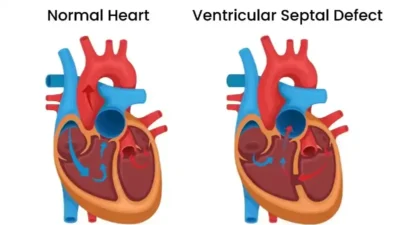
Ventricular Septal Defect (VSD) is one of the most common congenital heart defects, present in a baby from birth. It is a hole in the septum, the muscular wall that separates the heart’s two lower chambers, the left ventricle and the right ventricle. This wall normally keeps oxygen-rich blood in the left side of the heart separate from oxygen-poor blood in the right side.
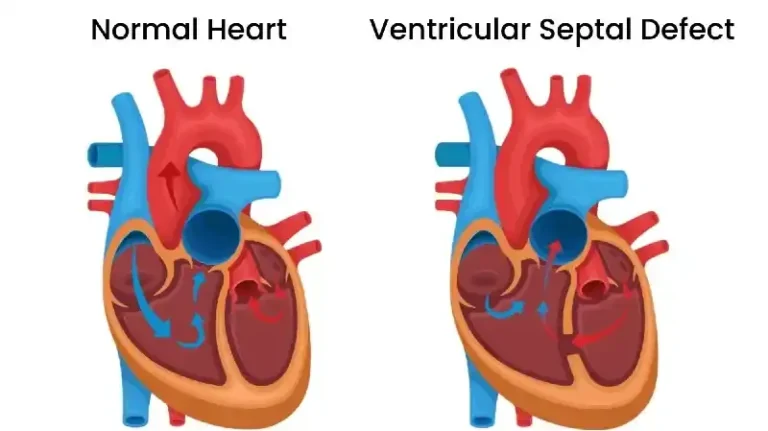
When a hole is present, oxygen-rich blood from the left ventricle flows abnormally into the right ventricle and out to the lungs, rather than being pumped efficiently to the rest of the body. This extra blood flow to the lungs makes both the heart and lungs work harder than they should.
VSDs vary widely in size and location. Small defects often cause little or no strain on the heart and may close naturally over time. Larger defects allow a greater volume of blood to recirculate through the lungs and can place significant strain on the heart if not treated, potentially leading to poor growth, heart failure, and, in long-standing untreated cases, high blood pressure in the lung arteries.
VSD may occur on its own or alongside other congenital heart defects. Regular pediatric check-ups and early evaluation of symptoms can help diagnose the condition before complications develop.
What are the Symptoms of Ventricular Septal Defect (VSD)?
Symptoms of VSD depend largely on the size of the defect and the amount of extra blood flow it sends to the lungs. A small VSD often causes no symptoms and may only be detected as a heart murmur during a routine check-up. A moderate to large VSD is more likely to produce noticeable signs, usually within the first few weeks to months of life.
Common symptoms include:
- Rapid or heavy breathing: Babies with a significant VSD may breathe faster than normal or appear to work harder to breathe, even at rest.
- Poor feeding and slow weight gain: The extra effort required to breathe and feed can lead to inadequate weight gain in infants.
- Fast heart rate: The heart works harder to compensate for the abnormal blood flow between the ventricles.
- Excessive sweating: Particularly noticeable during feeding or crying.
- Fatigue and low energy: Older children may tire more easily than their peers during play or physical activity.
- Heart murmur: A distinct, often harsh-sounding murmur is usually the first sign detected during a routine examination.
- Frequent respiratory infections: Increased blood flow to the lungs can make children more prone to chest infections.
- Poor growth: Infants with a large, untreated VSD may fail to grow and develop at the expected rate.
If your child shows signs of breathing difficulty, poor feeding, or a heart murmur is detected during a check-up, it is important to seek prompt pediatric cardiac evaluation.
What are the Causes of Ventricular Septal Defect (VSD)?
VSD develops during pregnancy, when the wall dividing the heart’s two lower chambers does not form completely. In most cases, an exact cause cannot be identified, but several factors are known to contribute to its development.
The most common causes and contributing factors include:
- Genetic and chromosomal conditions: Conditions such as Down syndrome are associated with a higher likelihood of VSD and other congenital heart defects.
- Family history: A family history of congenital heart disease can increase the likelihood of VSD in a newborn.
- Maternal infections during pregnancy: Certain viral infections, such as rubella, occurring in early pregnancy are linked to congenital heart defects, including VSD.
- Maternal health conditions: Poorly controlled diabetes during pregnancy is associated with an increased risk of congenital heart defects.
- Maternal alcohol or substance use during pregnancy: Certain exposures during pregnancy are linked to a higher risk of heart defects.
- Certain medications during pregnancy: Some medications taken without medical supervision during early pregnancy have been associated with congenital heart defects.
Risk Factors
Several factors increase the likelihood of a baby being born with a Ventricular Septal Defect. While some cannot be changed, understanding them helps in early identification and monitoring.
Important risk factors include:
- Family history of congenital heart disease
- Genetic conditions such as Down syndrome
- Maternal rubella or other viral infections during pregnancy
- Poorly controlled maternal diabetes
- Maternal alcohol consumption during pregnancy
- Advanced maternal age
- Premature birth
Identifying these risk factors allows our pediatric cardiac team to monitor at-risk newborns closely and intervene early when needed.
What are the Complications of Ventricular Septal Defect (VSD)?
If left untreated, a moderate to large VSD can place ongoing strain on the heart and lungs. Over time, this can lead to several serious complications.
Possible complications include:
- Heart enlargement (cardiomegaly)
- Heart failure
- Poor growth and failure to thrive in infants
- Increased risk of respiratory infections
- Irregular heart rhythms (arrhythmias)
- Pulmonary hypertension (high blood pressure in the lung arteries)
- Endocarditis (infection of the heart’s inner lining), in rare cases
- Aortic valve problems, if the defect affects nearby valve support
- Eisenmenger syndrome, in long-standing, untreated large VSDs
Early diagnosis and timely treatment significantly reduce the risk of these complications, which is why prompt evaluation is important once a VSD is suspected.
How is Ventricular Septal Defect (VSD) Diagnosed?
Doctors diagnose VSD by combining a clinical examination with specialized cardiac imaging to confirm the presence, size, and impact of the defect.
Common diagnostic methods include:
- Physical examination: The doctor listens to the heart using a stethoscope. A distinct heart murmur is often the first clue suggesting a VSD.
- Echocardiogram (Echo): The most important test for diagnosing VSD. It uses ultrasound waves to visualize the hole in the septum, confirm the diagnosis, and measure its size and effect on the heart.
- Electrocardiogram (ECG): Records the heart’s electrical activity and can detect heart enlargement or rhythm changes caused by a significant VSD.
- Chest X-ray: Helps identify heart enlargement and increased blood flow to the lungs.
- Pulse oximetry: Measures the oxygen level in the blood, which can help assess the impact of the defect.
- Cardiac Catheterization: Used in select cases for detailed evaluation, particularly to assess pressure in the lung arteries.
Your pediatric cardiologist will recommend the most appropriate tests based on your child’s age, symptoms, and overall health.
What are the Treatment Options for Ventricular Septal Defect (VSD)?
Treatment for VSD depends on the size of the defect, the child’s age, and whether it is causing symptoms. Small VSDs may only require monitoring, while larger or symptomatic VSDs typically require closure.
Watchful Monitoring
Many small VSDs close on their own within the first few years of life and cause no long-term effect on heart health. In these cases, regular monitoring with periodic echocardiograms may be recommended instead of immediate intervention.
Medications
Medications cannot close a VSD, but they can help manage symptoms in infants with larger defects, such as controlling fluid buildup and easing the workload on the heart, while awaiting closure or possible natural resolution.
Transcatheter (Device) Closure
A minimally invasive, catheter-based procedure in which a small closure device is guided through a blood vessel to seal certain types of VSD, without the need for open-heart surgery. This approach is suitable for select defects based on their size and location.
Surgical Closure
For larger VSDs, defects not suitable for device closure, or when symptoms are significant, open-heart surgery is performed to patch the hole and restore normal blood flow. This remains the standard treatment for most VSDs requiring closure.
It is important to complete all recommended follow-up echocardiograms after closure to confirm the VSD has sealed completely and the heart is functioning well.
Can Ventricular Septal Defect (VSD) Be Prevented?
Since VSD is a congenital condition, it cannot always be prevented, particularly when linked to genetic factors. However, certain measures during pregnancy can help reduce the risk.
Preventive measures include:
- Ensuring rubella immunity before pregnancy through vaccination
- Attending regular prenatal check-ups
- Carefully managing maternal diabetes and other health conditions during pregnancy
- Avoiding alcohol and unsupervised medication use during pregnancy
- Seeking prompt newborn cardiac screening if risk factors are present
When Should You See a Doctor?
You should consult a pediatric cardiac specialist if your child shows symptoms that may indicate VSD or another congenital heart condition.
Seek medical attention if you notice:
- Rapid or labored breathing
- Poor feeding or slow weight gain in an infant
- A heart murmur detected during a check-up
- Excessive sweating during feeding
- Frequent respiratory infections
- Fatigue or reduced activity in an older child
- Bluish discoloration of the lips or skin (in advanced, untreated cases)
Emergency medical care is required if your child develops severe breathing difficulty, poor feeding with lethargy, or signs of heart failure.
Frequently Asked Questions (FAQs)
Does every baby with VSD need surgery?
No. Many small VSDs close on their own, especially within the first few years of life, and may only require monitoring. Larger or symptomatic VSDs typically require device closure or surgical repair.
Is VSD closure surgery safe?
Yes. Both transcatheter device closure and surgical repair are well-established procedures with high success rates when performed by an experienced pediatric cardiac team.
Can a VSD close on its own?
Yes, particularly small muscular VSDs, which often close naturally within the first few years of life. Larger defects are less likely to close without treatment.
Is VSD dangerous if left untreated?
A large, untreated VSD can lead to heart enlargement, heart failure, poor growth, and, in long-standing cases, serious complications such as pulmonary hypertension.
Can adults have an undiagnosed VSD?
Yes. Small VSDs can occasionally go undetected until adulthood, particularly if they cause minimal symptoms, and may be discovered during evaluation for another condition.
What happens if a large VSD is left untreated?
Untreated large VSDs can eventually cause heart failure, pulmonary hypertension, and, in rare long-standing cases, irreversible lung vessel damage (Eisenmenger syndrome).
Why Hridayam Heart Hospital for Ventricular Septal Defect (VSD) Treatment in Lucknow, Uttar Pradesh, India?
Hridayam Heart Hospital is one of the trusted destinations for Ventricular Septal Defect treatment in Lucknow, Uttar Pradesh, India, offering comprehensive pediatric cardiac care through a team of highly experienced pediatric cardiac surgeons, pediatric cardiologists, cardiac anesthesiologists, and critical care specialists. Equipped with advanced diagnostic technology and modern pediatric cardiac care facilities, we provide accurate diagnosis, personalized treatment plans, and advanced catheter-based and surgical management for infants and children with VSD. Our hospital follows international standards of patient safety, infection control, and evidence-based cardiac care, ensuring the highest quality treatment at every stage. From early diagnosis and minimally invasive closure to surgical repair and long-term follow-up, we are committed to delivering compassionate, child-centered care with the goal of protecting healthy growth and giving every child the best start in life.