What is Tetralogy of Fallot (TOF)?
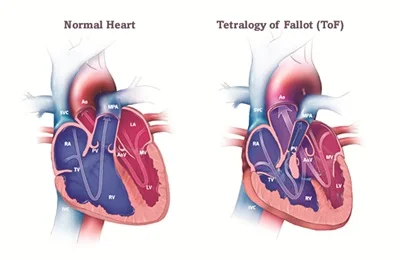
Tetralogy of Fallot (TOF) is a complex congenital heart defect present from birth, made up of four related structural problems occurring together within the heart. It is one of the most common cyanotic congenital heart defects, meaning it can cause a bluish discoloration of the skin and lips due to reduced oxygen levels in the blood.
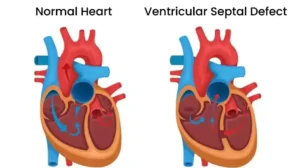
The four defects that make up Tetralogy of Fallot are a ventricular septal defect (a hole between the heart’s two lower chambers), pulmonary stenosis (narrowing of the pathway from the heart to the lungs), an overriding aorta (the aorta sits directly over the ventricular septal defect instead of over the left ventricle alone), and right ventricular hypertrophy (thickening of the muscle wall of the right ventricle caused by the extra workload).
Together, these defects cause oxygen-poor blood to bypass the lungs and mix with oxygen-rich blood before being pumped to the rest of the body. This results in lower-than-normal oxygen levels in the bloodstream, which is what causes the cyanosis often associated with the condition.
The severity of TOF varies depending mainly on the degree of pulmonary stenosis. Some infants show signs of low oxygen levels shortly after birth, while others may not develop noticeable symptoms until later in infancy. Left untreated, Tetralogy of Fallot can lead to worsening cyanosis, poor growth, and serious complications. With timely diagnosis and surgical correction, most children go on to lead active, healthy lives.
What are the Symptoms of Tetralogy of Fallot (TOF)?
Symptoms of TOF depend on the severity of pulmonary stenosis and how much oxygen-poor blood bypasses the lungs. Some infants show symptoms soon after birth, while others develop signs gradually over the first weeks or months of life.
Common symptoms include:
- Cyanosis: A bluish tint to the skin, lips, and nail beds caused by low oxygen levels in the blood, which may worsen with feeding, crying, or activity.
- Tet spells: Sudden episodes of deep cyanosis, irritability, and difficulty breathing, often triggered by crying, feeding, or straining, requiring prompt medical attention.
- Heart murmur: A distinct murmur caused by turbulent blood flow through the narrowed pulmonary pathway is usually detected during a routine examination.
- Poor feeding and slow weight gain: Reduced oxygen delivery can make feeding tiring for infants, leading to inadequate growth.
- Rapid breathing or shortness of breath: Particularly during feeding, crying, or physical activity.
- Fatigue and reduced activity: Older children may tire quickly during play and prefer to rest or squat during exertion.
- Clubbing: Rounding and widening of the fingertips and toenails, which can develop over time in children with long-standing low oxygen levels.
- Squatting behavior: Older children with TOF often instinctively squat during physical activity, which temporarily improves blood flow to the lungs and eases symptoms.
If your child shows signs of bluish discoloration, breathing difficulty, or a tet spell, it is important to seek immediate pediatric cardiac evaluation.
What are the Causes of Tetralogy of Fallot (TOF)?
TOF develops during pregnancy, when the heart does not form completely as the fetus grows. In most cases, an exact cause cannot be identified, but several factors are known to contribute to its development.
The most common causes and contributing factors include:
- Genetic and chromosomal conditions: Conditions such as Down syndrome and 22q11.2 deletion syndrome (DiGeorge syndrome) are strongly associated with Tetralogy of Fallot.
- Family history: A family history of congenital heart disease increases the likelihood of TOF in a newborn.
- Maternal infections during pregnancy: Certain viral infections, such as rubella, occurring in early pregnancy are linked to congenital heart defects, including TOF.
- Poorly controlled maternal diabetes: Uncontrolled blood sugar levels during pregnancy are associated with an increased risk of congenital heart defects.
- Maternal alcohol use or poor nutrition during pregnancy: Certain exposures and nutritional deficiencies, such as inadequate folic acid, are linked to a higher risk of heart defects.
- Advanced maternal age: Pregnancies in older mothers carry a somewhat higher reported risk of congenital heart defects.
Risk Factors
Several factors increase the likelihood of a baby being born with Tetralogy of Fallot. While some cannot be changed, understanding them helps in early identification and monitoring.
Important risk factors include:
- Family history of congenital heart disease
- Genetic conditions such as Down syndrome or 22q11.2 deletion syndrome
- Maternal rubella or other viral infections during pregnancy
- Poorly controlled maternal diabetes
- Maternal alcohol consumption or malnutrition during pregnancy
- Advanced maternal age
Identifying these risk factors allows our pediatric cardiac team to monitor at-risk newborns closely and intervene early when needed.
What are the Complications of Tetralogy of Fallot (TOF)?
If left untreated, Tetralogy of Fallot can place ongoing strain on the heart and body due to chronically low oxygen levels. Over time, this can lead to several serious complications.
Possible complications include:
- Worsening cyanosis and low blood oxygen levels
- Tet spells with risk of severe oxygen deprivation
- Poor growth and failure to thrive in infants
- Blood clotting abnormalities and increased stroke risk
- Infective endocarditis (infection of the heart’s inner lining or valves)
- Irregular heart rhythms (arrhythmias), particularly later in life
- Right-sided heart failure
- Delayed growth and developmental delays in severe, prolonged cases
Early diagnosis and timely surgical correction significantly reduce the risk of these complications, which is why prompt evaluation is important once TOF is suspected or diagnosed.
How is Tetralogy of Fallot (TOF) Diagnosed?
Doctors diagnose TOF by combining a clinical examination with specialized cardiac imaging to confirm the defects present and their severity.
Common diagnostic methods include:
- Physical examination: The doctor listens to the heart using a stethoscope. A distinct murmur and signs of cyanosis often raise initial suspicion of TOF.
- Pulse oximetry: A simple, painless test that measures the oxygen level in the blood and helps identify low oxygen saturation.
- Echocardiogram (Echo): The most important test for diagnosing TOF. It uses ultrasound waves to visualize all four structural defects and assess their severity.
- Electrocardiogram (ECG): Records the heart’s electrical activity and can detect right ventricular hypertrophy or rhythm changes.
- Chest X-ray: May show a characteristic “boot-shaped” heart along with reduced blood flow to the lungs.
- Cardiac Catheterization: Used in select cases to map out the pulmonary arteries and coronary artery pattern in detail before surgery.
- Cardiac MRI or CT scan: Provides detailed three-dimensional images of the heart’s structure, particularly useful for surgical planning in complex cases.
Your pediatric cardiologist will recommend the most appropriate tests based on your child’s age, symptoms, and overall health.
What are the Treatment Options for Tetralogy of Fallot (TOF)?
Tetralogy of Fallot requires surgical correction in almost all cases. Treatment depends on the child’s age, symptoms, oxygen levels, and the specific anatomy of the defects.
Medications
Medications do not correct the underlying structural defects but may be used to manage symptoms, stabilize oxygen levels, and treat tet spells while a child is awaiting surgery.
Palliative (Shunt) Surgery
In infants who are too small, unstable, or have complex anatomy not yet suitable for complete repair, a temporary surgical shunt may be placed to improve blood flow to the lungs and increase oxygen levels until complete repair can safely be performed.
Complete Intracardiac Repair
The definitive treatment for TOF, usually performed in infancy. This open-heart surgery closes the ventricular septal defect with a patch and widens the narrowed pathway to the lungs, correcting the abnormal blood flow. Most children who undergo complete repair go on to lead active lives.
Long-Term Follow-Up Care
Because the pulmonary valve and right ventricle may need ongoing monitoring, patients who have undergone TOF repair require regular lifelong cardiology follow-up, including periodic echocardiograms, to watch for pulmonary valve leakage, arrhythmias, or the need for further intervention.
It is important to complete all recommended follow-up visits after surgery to monitor heart function and catch any late complications early.
Can Tetralogy of Fallot (TOF) Be Prevented?
Since TOF is a congenital condition, it cannot always be prevented, particularly when linked to genetic factors. However, certain measures during pregnancy can help reduce the risk.
Preventive measures include:
- Ensuring rubella immunity before pregnancy through vaccination
- Attending regular prenatal check-ups
- Taking folic acid supplementation as advised before and during pregnancy
- Carefully managing maternal diabetes and other health conditions during pregnancy
- Avoiding alcohol and unsupervised medication use during pregnancy
- Seeking prompt newborn cardiac screening if risk factors are present
When Should You See a Doctor?
You should consult a pediatric cardiac specialist immediately if your child shows symptoms that may indicate TOF or another congenital heart condition.
Seek medical attention if you notice:
- Bluish discoloration of the lips, skin, or nail beds
- A sudden episode of deep cyanosis, irritability, or breathing difficulty (a tet spell)
- Rapid or labored breathing
- Poor feeding or slow weight gain in an infant
- A heart murmur detected during a check-up
- Fatigue, reduced activity, or frequent squatting during play in an older child
Emergency medical care is required if your child develops a severe tet spell, loses consciousness, or shows sudden worsening of breathing or color.
Frequently Asked Questions (FAQs)
Does every baby with TOF need surgery?
Yes. Tetralogy of Fallot requires surgical correction in nearly all cases, though the timing and type of surgery — palliative shunt or complete repair — depend on the child’s anatomy and overall condition.
Is TOF repair surgery safe?
Yes. Complete intracardiac repair is a well-established procedure with high success rates when performed by an experienced pediatric cardiac surgical team, and most children go on to lead active lives afterward.
Can TOF be detected before birth?
Yes, in many cases. TOF can often be identified during a routine prenatal ultrasound or fetal echocardiogram, allowing families to plan for specialized care at birth.
Is TOF dangerous if left untreated?
Yes. Untreated TOF can lead to worsening cyanosis, poor growth, tet spells, and serious complications such as stroke or heart failure.
What is a tet spell?
A tet spell is a sudden episode of deep cyanosis, irritability, and difficulty breathing caused by a temporary drop in blood oxygen levels. It requires prompt medical attention.
Can adults live normal lives after TOF repair?
Yes. With successful surgical repair and consistent long-term follow-up, most people born with TOF go on to lead active, fulfilling lives, though lifelong cardiology monitoring remains important.
Why Hridayam Heart Hospital for Tetralogy of Fallot (TOF) Treatment in Lucknow, Uttar Pradesh, India?
Hridayam Heart Hospital is one of the trusted destinations for Tetralogy of Fallot treatment in Lucknow, Uttar Pradesh, India, offering comprehensive pediatric cardiac care through a team of highly experienced pediatric cardiac surgeons, pediatric cardiologists, cardiac anesthesiologists, and critical care specialists. Equipped with advanced diagnostic technology and modern pediatric cardiac care facilities, we provide accurate diagnosis, personalized treatment plans, and advanced surgical management for infants and children with TOF, from palliative procedures to complete intracardiac repair. Our hospital follows international standards of patient safety, infection control, and evidence-based cardiac care, ensuring the highest quality treatment at every stage. From early diagnosis and surgical correction to long-term follow-up, we are committed to delivering compassionate, child-centered care with the goal of protecting healthy growth and giving every child the best start in life.